
Your fridge freezer works really hard, always on to keep your food in good shape. But, it also uses a lot of energy from your house. With some easy tips, you can cut down how much energy your freezer uses. This means lower bills for you and helping the planet too.
We’re going to share with you effective energy-saving tips for freezers to ensure your unit isn’t using more energy than it needs. By trying out these tips for better energy efficiency, not only will you save some cash but also do something good for our Earth by lowering what’s called your carbon footprint – basically making less pollution just by being smart about using appliances like fridges or freezers at home.
Essential Energy-Saving Tips for Your Freezer
When thinking about making your freezer more energy-efficient, there are a few key tips to remember.
1. Optimize Freezer Temperature Settings
To keep your freezer working without wasting energy, it’s important to have the right temperature settings. For your fridge, aim for 5 degrees Celsius and set your freezer at -18 degrees Celsius. If you can’t see exact temperatures on your fridge, turning the dial to halfway is generally a good bet. Also, having a thermometer in there helps you check and tweak these temperatures when necessary. This way, not only does food stay safe and fresh but also you’re cutting down on power use and helping your freezer last longer.
2. Ensure Proper Ventilation Around Your Freezer
To make sure your freezer works as efficiently as possible, it’s really important to keep the air moving around it properly. Here are some easy steps you can follow:
- For starters, put your fridge freezer in a spot that’s cool and dry where the air can move freely.
- Try not to place it where the sun hits directly or near things that get hot like radiators or ovens.
- Make sure there’s enough room all around – on the sides, back, and above – so air can circulate well.
- Check that nothing is blocking the vents of your freezer; they need to be clear for good airflow.
- It’s also a good idea to clean behind your freezer now and then. Dust and stuff piling up back there can mess with how well air moves.
By keeping these tips in mind about ventilation for energy efficiency with fridges/freezers, you’re helping yours run better. This means saving power and doing a bit more for our planet by cutting down on carbon emissions.
3. Regularly Defrost to Prevent Ice Build-up
Making sure you defrost your freezer regularly is key to keeping it running efficiently. When ice piles up, it wraps around the coils like a blanket, making it tough for your freezer to stay cool without working overtime. This not only uses more energy but also cuts down on how well your freezer can chill.
To stop too much frost from gathering, aim to defrost your freezer every six months or when you see a lot of frost forming. Clear everything out and let the ice melt away on its own. If you’re in a hurry, grabbing some de-icer spray or an ice scraper can make things quicker. By doing this simple task, you help maintain the energy efficiency of your appliance and extend its life.
4. Check and Maintain the Door Seal
The seal on your freezer door is super important for keeping it running efficiently. If this seal gets damaged or starts to wear out, you might end up with cold air leaking out and warm air sneaking in. This means your freezer has to work extra hard just to keep things cold. It’s a good idea to regularly look over the door seal for any damage like cracks, tears, or if it feels brittle.
To see how well the door seal is holding up, try slipping a piece of paper or even a £5 note between the freezer door and its seal. If you find that the paper can be pulled out easily or falls down by itself, then you’ve got a problem with the seal that needs fixing right away. Keeping that seal tight helps stop energy from being wasted and keeps your freezer working at its best.
5. Organize Contents for Efficient Use
Keeping your freezer tidy can help save energy and make the best use of space. Here’s how you can organize your freezer better:
- For easy spotting, store things in clear containers or bags.
- With labels showing what’s inside and when it was frozen, finding stuff becomes a breeze.
- By putting like items together, you’ll save space and cut down on time looking for specific things.
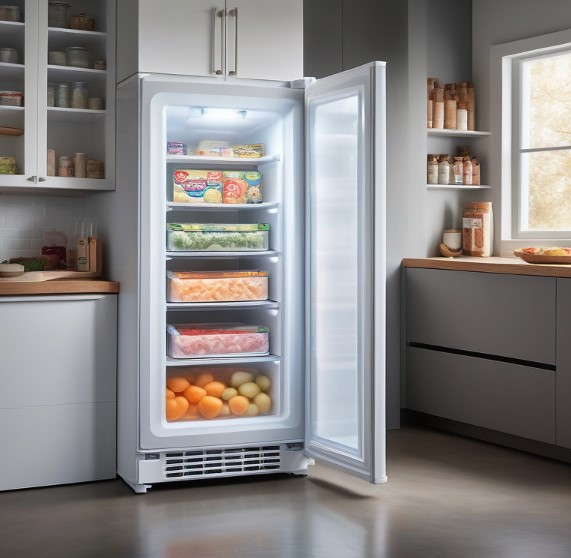
- Make sure not to pack your freezer too full; this lets air move freely and keeps up its energy efficiency.
- Getting rid of old or unused items regularly helps free up space and keeps everything neat.
By doing these simple steps, you’re not just saving on energy costs but also maximizing the storage area in your freezer.
6. Fill It Up, But Don’t Overcrowd
When you’re stocking up your freezer, it’s all about finding that sweet spot. You want to make the most of the space you’ve got without stuffing it too full. Overpacking can block airflow and make your freezer work harder than it needs to, which isn’t good for energy efficiency. Try to keep your freezer about three-quarters full; this allows air to move freely and keeps everything cool without wasting energy. By storing food in containers or bags, you can keep things tidy and use every inch wisely while keeping an eye on saving energy.
7. Store Food in the Right Containers
When picking containers to store food in your freezer, going for ones that seal tightly like airtight containers or freezer bags can really help with energy efficiency. These kinds of storage options keep air out and stop freezer burn, keeping your food fresh and tasty while also cutting down on the cooling energy needed. On the other hand, using big containers that just take up too much room isn’t wise because it makes your freezer work harder than it needs to. By choosing the right kind of container, you’re not only making sure your frozen food lasts longer but also boosting the energy efficiency of your freezer.
8. Keep the Freezer Interior Clean
To keep your freezer working its best and save on energy, it’s important to clean it regularly. With spills, bits of food, or too much ice inside, the air can’t move around as well. This makes the freezer work harder than it needs to. For cleaning, just use some gentle soap or a mix of vinegar and water for the insides and shelves. Stay away from strong cleaners or rough tools that could scratch up your freezer. By doing this simple task often, you help your freezer run better for longer while keeping your frozen foods in good shape.
9. Upgrade to an Energy-Efficient Model if Necessary
If your current freezer is outdated or not energy-efficient, consider upgrading to a more energy-efficient model. Newer freezers often come with advanced features and technologies that enhance energy efficiency and reduce energy consumption. Look for freezers with high energy star ratings, indicating their energy efficiency level. Consider the size and capacity that best suits your needs while optimizing energy savings. Before making a purchase, compare energy efficiency ratings, features, and prices to make an informed decision. Investing in an energy-efficient freezer can significantly reduce your energy bills in the long run.
Conclusion
In conclusion, by following these simple energy-saving tips for freezers, you’re not just cutting down on costs but also living more sustainably. With the right temperature settings, making sure there’s enough air flow around it, and keeping things tidy inside can really make a difference in how well your freezer works and how much electricity it uses. It’s amazing how little adjustments can add up to big savings over time. For those interested in finding even more ways to fix your non-working freezer, our “Sub Zero Refrigerator Freezer Not Cold: How to Resolve” blog post has plenty of ideas worth checking out.
Frequently Asked Questions
What Is the Ideal Temperature Setting for a Freezer?
Setting your freezer to -18 degrees Celsius is the sweet spot. At this temperature, you keep your food safe, avoid frost on your stuff, and don’t use more energy than needed. Keeping it at this level helps everything stay cool without wasting power. To make sure it stays right there, check the temperature now and then with a fridge thermometer or just use the settings that come with your freezer for top-notch energy efficiency.
How Often Should I Defrost My Freezer?
To keep your freezer working its best and to save on energy, you should defrost it at least once or twice a year. Do this especially when the ice gets about 0.6cm thick. By doing regular defrosts, your freezer will run more smoothly and use less power.
Can a Full Freezer Actually Save Energy?
When you fill your freezer, not only do you have more food available, but it also helps maintain cold temperatures. The stored items act as insulation, reducing the workload of the freezer and saving energy. Furthermore, a full freezer prevents excessive warm air from entering when the door is opened, leading to improved energy efficiency. Therefore, keeping your freezer well-stocked is a wise choice for reducing energy consumption.